Thanks for joining me on a journey to learn more about the effects humans have on the Earth!
Science is a way of thinking much more than it is a body of knowledge.
– Carl Sagan
In this blog, I will explain how climate change affects species on the earth, and how these changes can also affect human beings. I hope you enjoy and learn something new!
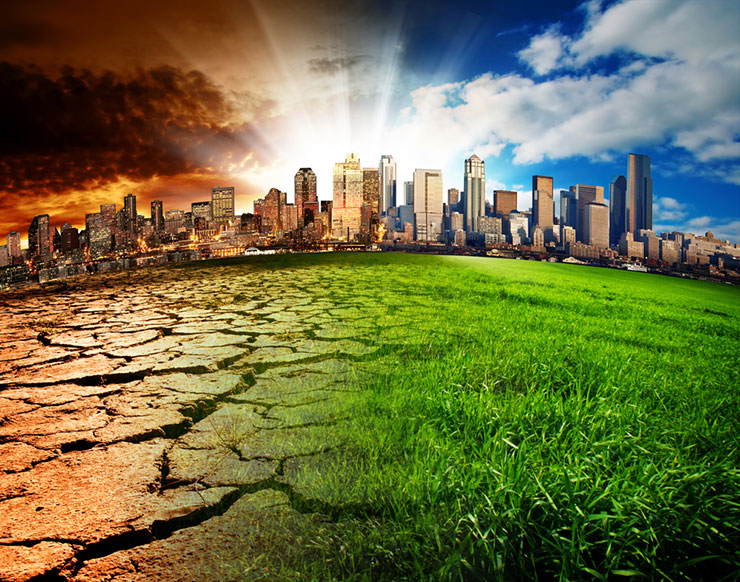
The changes the Earth will see if we continue down the same path without making changes
Climate change has become a sensitive topic in society, especially recently. Though many people like to claim that climate change is not happening, there are many studies that have proven that climate change is causing the ecosystems and species on Earth to change drastically. Climate change is defined as a change in regional or global climate patterns that have been caused due to increasing amounts of carbon dioxide in the atmosphere. These increasing amounts of carbon dioxide can cause changes in temperature, precipitation, sea levels, ocean acidification, and more. This has become a large issue today, due to human activities, such as burning fossil fuels. If humans do not make changes to their lifestyles, and make them quickly, species all over the world will begin to disappear. It is our duties as humans to take care of our home and the species that live among us.
Climate change is viewed as such a large issue due to it’s enormous scale of impact. Climate change can be felt globally, regionally, and locally. Due to how invasive climate change can be, it can impact every single part of life throughout the world and can impact every species in one way or another. There is no escaping climate change, especially with how escalated it has become due to human interaction, such as deforestation, carbon release, and much more. Though the effects of climate change can’t be seen as much as one would think, it is still important for people to realize how big the issue is right now. If we continue to leave this problem for another time, we will be unable to fix what has been broken. Though there are many things that have been affected due to climate change that cannot be fixed, there are many more that can be fixed and repaired if we put in the effort.
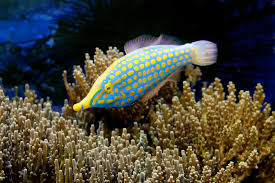
The Orange-Spotted Filefish in its natural habitat, coral
The Orange-spotted filefish is a fish that few people know about on the top of their head. These fish rely solely on the coral reefs in the Indo-Pacific Oceans. As from the picture above, you can see how the fish is mostly a teal blue with yellow spots and stripes all around it. It’s main food source is Acropora polyps, which is a type of stone coral. Not only do they use this coral for food, but they also use it for protection, shelter, and mating purposes. While filefish swim around the coral, the chemicals from the Acropora are absorbed by the fish so that the fish cannot be distinguished by predators, like cod. Eating the coral also masks the smell of the fish from others. The coral also provides protection as shelter as the fish can camouflage themselves, as the coral is bright in colors as well. The coral can also be used as shelter just by being a home for the fish. The filefish have nests inside the coral that they live in and also mate and reproduce in. The coral provides protection and shelter for young filefish. Without these corals, the filefish would lose the most valuable resource it has. As the fish is quite small, it is not possible for it to migrate to new areas.
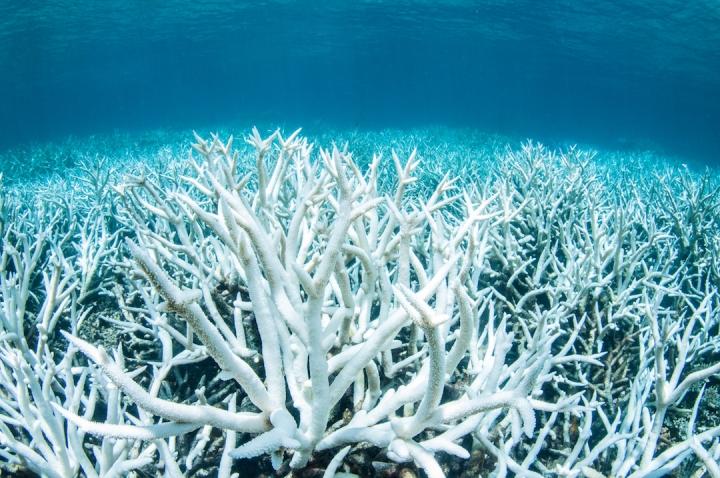
Bleached coral from climate change and ocean acidification
Climate change can cause acidification of the ocean. As many species in the world are specialized organisms, they require a certain pH in order to survive. Once ocean acidification occurs, the pH of the ocean begins to get more acidified. This causes many species, like coral, to begin to die as they can not function the way they need to in order to survive. The way this is seen in coral is by bleaching, as pictured above. The coral begins to die, which causes it to loose its vibrant colors and smaller species that live on the coral. Once bleaching occurs, the coral cannot be restored, which means species that rely on the coral cannot get the resources they require. This means that ocean acidification does not only affect one species. As the coral dies, the orange-spotted filefish will also begin to die as they have no food, shelter, or protection. Without this coral, the filefish have no way to continue living and would become prey to many other species. Not only would climate change directly affect the filefish, but it would also affect all other species that rely on this coral. As stated in another post, the negative effects due to climate change do not only affect one species. Climate change affects all species in one way or another.
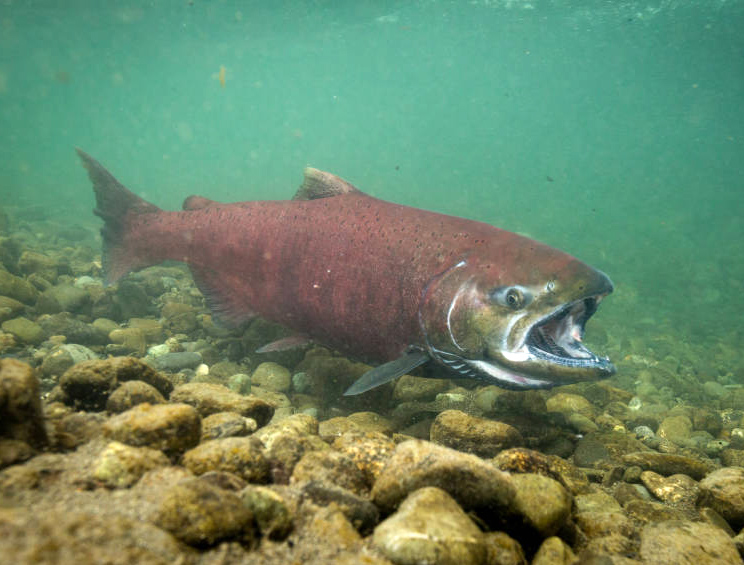
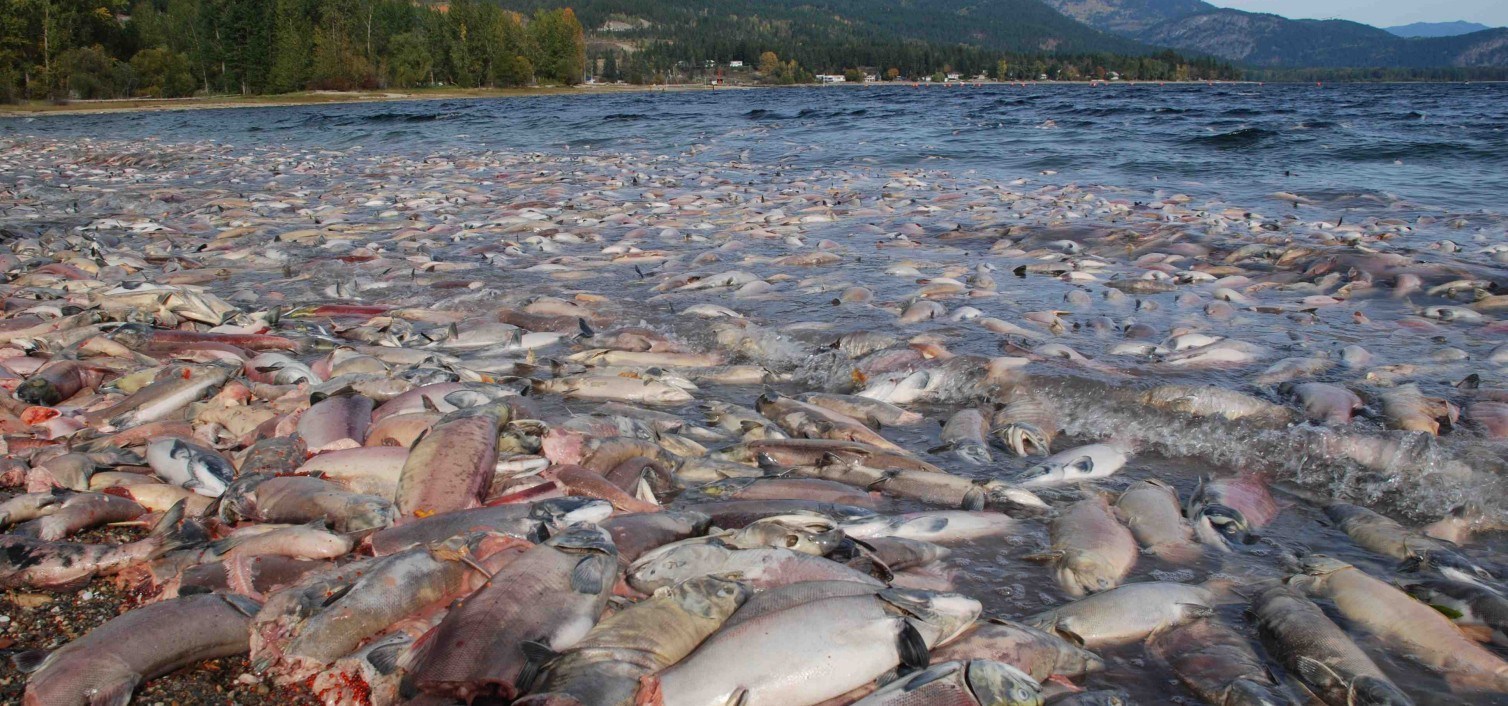
Salmon are very prominent in society today. You cannot go into a food market without seeing some kind of salmon in a section. Many people eat salmon on a regular basis, which shows that they are important to the way of living we have today. Salmon live all over the world, from the Artic to Japan, and even in China. Adult salmon can grow up to ten pounds in weight for the Atlantic salmon, while king salmon adults can grow anywhere from 20-80 pounds. While most salmon live in the ocean for most of their life, they will return to the stream that they hatched in so that they can spawn and reproduce. They do this by using their sense of smell in order to find the stream they were hatched in. Pacific salmon that spawn will die soon after, but Atlantic salmon can spawn up to three or four times before they die. Most young salmon leave for the ocean immediately after they are born. As salmon begin to travel in order to spawn, they also change colors in order to appeal to mates more.
Since salmon are considered a keystone species, it is very important to make sure that they are being protected in the environment. Habitat degradation has been a recent threat to salmon around the world, but a more intense threat is climate change. Climate change, specifically higher temperatures and changes in hydrology of streams, is causing detrimental changes to the ecosystems that salmon need in order to survive. Higher temperatures can e very harmful to salmon as they change the flow pattern of streams. If these flow patterns are changed, it makes it much more difficult for salmon to travel and for them to get back to certain streams in order to spawn. If these flow patterns continue changing, it could become impossible for salmon to find their way back to the streams they need to get to, which could keep the salmon from breeding. This means the number of salmon would decrease dramatically, until the point where there were hardly any left. Not only can higher temperatures cause changes in stream flow, but it can also cause a larger susceptibility to predators, parasites, disease, and loss of shelter for the salmon. Salmon have specific characteristics needed by the environment around them in order for them to survive. If these characteristics are changed even slightly, salmon can quickly begin to die. Climate change can cause large variations in every part of the salmon’s life, which makes it increasingly difficult for the salmon to survive.
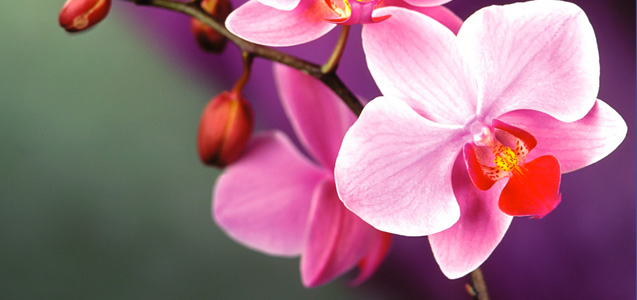
Orchids are a diverse family of flowers that comes in a variety of colors and fragrances. Orchids are one of the largest flowering families in the world, containing around thirty thousand species. Orchids are also one of the most widely coveted flowering plants in the world and many people collect them for sport. Since there are so many different species of orchids, it makes it very easy for each species to be susceptible to variations in their ecosystems. This makes them a very difficult flowering plant to take care of, especially if there is more than one species in the same place. Orchids have multiple ways of reproducing, such as using animals like bees or wasps and self-pollination. These rely on the temperatures brought on by different seasons. When the temperature is right for reproduction, the orchids release pollen to self-fertilize or to allow bees/wasps to take the pollen to new areas. Though these flowers are not a keystone species, they do allow for more biodiversity in the world and bring profit to humans as there is a large trade for them.
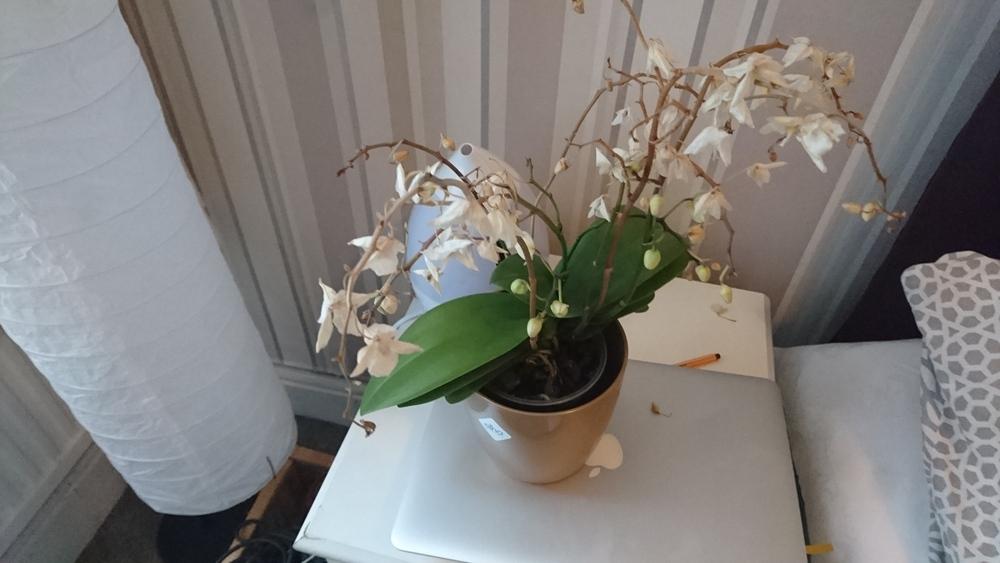
Orchids are a very sensitive species. One of the most easily altered parts of an orchid is when it is ready to reproduce. Orchids rely on temperatures to know when they should reproduce. This means that when temperatures change due to climate change, the timing of the orchid reproductive systems change as well. As the temperature continues to warm and get warmer earlier every year, orchids are not successfully reproducing because they are missing their mating season. Bees are also a major way that orchids reproduce, as the bees pollinate the flowers. Rising temperatures are causing flowers to be ready for pollination much earlier in the year, while the bees are still trying to pollinate later in the year. This means that the bees are not able to get to the orchids while they are ready for reproduction, which means the bees cannot pollinate the flowers. This means no reproduction for the orchids. If they are unable to reproduce, orchids will not continue to be found in the wild, which means a large loss of biodiversity. It also means that humans lose the profit from trading these flowering plants. Climate change continues to cause these plants to reproduce less and less as the temperatures continue to change.
Loss of biodiversity due to deforestation and other human activities
Climate change can cause more damage to the earth than most people realize. With rising temperatures, rising sea levels, ocean acidification, water flow changes, and much more, climate change is introducing many large threats to the world. With these come many consequences. One of which is losing valuable biodiversity throughout the world, as species cannot compete with these many changes. Species are very sensitive and can die even if some part of their ecosystem is changed the smallest amount. If certain species are lost, other species could be negatively affected. Many species rely on other species in the same ecosystem in order to survive, such as for food, protection, or shelter. Humans also depend on many species for food and materials used in everyday life. If these species are threatened or go extinct, humans will lose many materials that are vital to survival. Humans will also have a loss of income as these species begin to die off. With species mentioned before on this blog, such as the filefish, salmon, and orchids, there is income associated with them. Without these species, humans will lose all profits that come with selling and eating these species. If we do not do something about climate change, and the negative effects that come with it, we will start losing more and more species as time goes on. Without these species, the cycle of life will fall apart, and many more species will continue to die off. These three species are not the only thing that will be affected by climate change. Human health, air quality, water quality, food quality and safety, and more are at stake the longer that humans do not try and fix what has been going wrong due to climate change.

 Julie's Science Blog